.png)

7 Types of Traditional Yoga and Their Benefits for Mind & Body
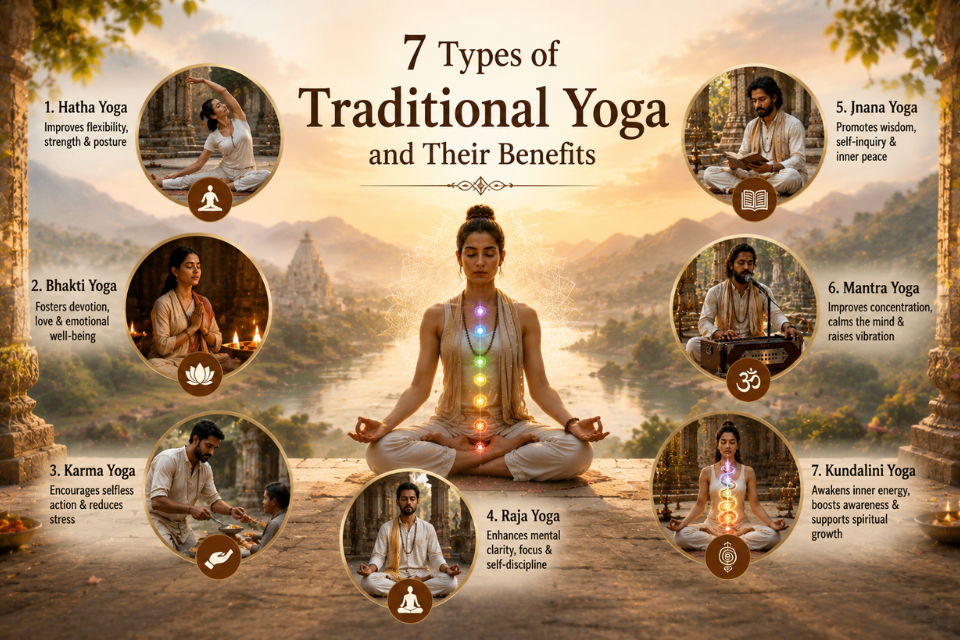
Yoga is much more than physical exercise. It is an ancient practice that helps create balance between the body, mind, and soul. Today, many people know yoga mainly through physical postures, but traditional yoga includes several powerful paths designed for complete well-being and self-development.
Understanding the 7 types of traditional yoga and their benefits can help you choose the right yoga practice according to your lifestyle, personality, and wellness goals. Some people connect through movement, some through devotion, while others prefer meditation, wisdom, or selfless service.
These traditional yoga practices continue to remain highly relevant in modern life because they help reduce stress, improve physical health, and create inner peace naturally.
1. Hatha Yoga

Hatha Yoga is one of the most popular and beginner-friendly forms of traditional yoga. The word “Hatha” represents balance between opposite energies within the body and mind.
This yoga style mainly focuses on:
Physical postures (Asanas)
Breathing techniques (Pranayama)
Mudras and Bandhas
Relaxation and cleansing practices
Hatha Yoga is usually slow-paced and highly suitable for beginners. It improves flexibility, posture, balance, and overall body awareness.
In today’s sedentary lifestyle, Hatha Yoga is extremely beneficial because it helps reduce body stiffness, improve blood circulation, and relax the nervous system.
Benefits of Hatha Yoga
Improves flexibility and mobility
Reduces stress and anxiety
Enhances posture and balance
Increases body awareness
Supports mental relaxation
2. Raja Yoga

Raja Yoga is known as the “Royal Path” of yoga because it focuses on mastering and controlling the mind through meditation and discipline.
This traditional yoga practice was deeply explained in the ancient Yoga Sutras. Raja Yoga helps people calm mental distractions and achieve emotional balance.
Key practices include:
Meditation
Concentration techniques
Self-discipline
Breath awareness
Ethical living
In modern life, where stress and distractions are common, Raja Yoga helps improve mindfulness, focus, and mental clarity.
Benefits of Raja Yoga
Improves concentration and focus
Reduces overthinking and stress
Enhances emotional stability
Develops self-awareness
Encourages inner peace
You can also read : Yoga for Diabetes Management: Best Yoga Practices for a Healthier Lifestyle
3. Karma Yoga

Karma Yoga is the yoga of selfless action and service. It teaches people to perform their duties sincerely without attachment to results.
This path encourages compassion, kindness, gratitude, and positive contribution toward society.
Karma Yoga can easily be practiced in everyday life through:
Helping others
Honest work
Community service
Positive actions and attitudes
This traditional yoga path reminds us that yoga is not limited to physical practice but can also be reflected through our actions.
Benefits of Karma Yoga
Reduces ego and selfishness
Develops compassion and gratitude
Creates mental balance
Encourages positive thinking
Builds meaningful relationships
4. Bhakti Yoga

Bhakti Yoga is the path of devotion, faith, and unconditional love. It focuses on opening the heart through prayer, chanting, singing, and devotion toward a higher power.
This form of traditional yoga helps create emotional healing and spiritual connection.
Bhakti Yoga practices include:
Mantra chanting
Devotional songs
Prayer
Meditation with gratitude
In stressful times, Bhakti Yoga helps people experience emotional comfort, positivity, and peace.
Benefits of Bhakti Yoga
Promotes emotional wellness
Reduces negative emotions
Creates feelings of positivity
Strengthens compassion and love
Helps reduce loneliness and stress
5. Jnana Yoga

Jnana Yoga is the path of wisdom and self-inquiry. It focuses on gaining deeper understanding through knowledge, awareness, and reflection.
People practicing Jnana Yoga often study spiritual teachings and ask important questions related to life, consciousness, and the self.
This yoga path develops:
Self-awareness
Wisdom
Clarity of thought
Mindful understanding
Jnana Yoga helps individuals move beyond confusion and develop a balanced perspective toward life.
You can also read : Yoga for Posture Correction: A Complete Guide to Fixing Poor Posture Naturally
Benefits of Jnana Yoga
Improves self-awareness
Enhances clarity and wisdom
Encourages mindful living
Helps reduce mental confusion
Develops deeper understanding of life
6. Kundalini Yoga
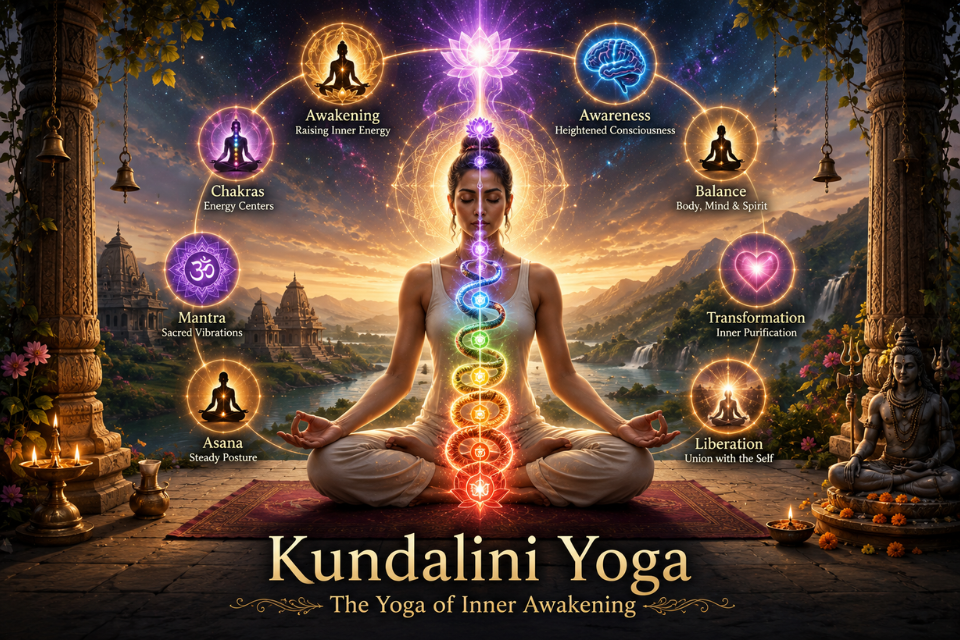
Kundalini Yoga focuses on awakening the inner energy present within the body. It combines physical movements, breathing exercises, meditation, and mantra chanting.
This form of yoga aims to activate physical, mental, and spiritual energy together.
Kundalini Yoga includes:
Dynamic movements
Breathing techniques
Meditation
Energy awareness practices
Mantra chanting
Many people practice Kundalini Yoga to improve emotional balance, mental strength, and spiritual growth.
Benefits of Kundalini Yoga
Boosts energy levels
Improves emotional balance
Reduces stress and fatigue
Enhances focus and awareness
Supports spiritual growth
7. Mantra Yoga

Mantra Yoga uses sacred sound vibrations and repeated chanting to calm the mind and improve concentration.
In this practice, specific mantras are repeated silently or aloud. The vibrations created through chanting help reduce mental noise and create deep inner stillness.
In today’s busy lifestyle, Mantra Yoga is highly effective for relaxation and mental peace.
Benefits of Mantra Yoga
Calms the mind
Improves concentration
Reduces anxiety and stress
Creates inner peace
Supports meditation practices
Why Traditional Yoga Is Still Important Today
The importance of traditional yoga has increased significantly in modern life. Long working hours, stress, anxiety, unhealthy lifestyles, and mental distractions have made people search for natural ways to improve health and emotional balance.
The 7 types of traditional yoga and their benefits provide a complete approach toward physical wellness, mental clarity, emotional healing, and spiritual growth.
Whether someone prefers physical exercise, meditation, devotion, wisdom, or service, yoga offers a path suitable for everyone.
Conclusion
Traditional yoga is a complete system for physical health, mental wellness, emotional balance, and spiritual development. Each yoga path offers unique benefits and helps individuals create a healthier and more balanced lifestyle.
Some people connect more with physical practices like Hatha Yoga, while others feel drawn toward meditation, devotion, selfless service, or spiritual wisdom.
No matter which path you choose, practicing yoga regularly can help improve overall well-being, reduce stress naturally, and create greater awareness in daily life.
Understanding the 7 types of traditional yoga and their benefits can help you begin your yoga journey with better clarity and purpose.
FAQS
1. What are the 7 types of traditional yoga?
The 7 types of traditional yoga are Hatha Yoga, Raja Yoga, Karma Yoga, Bhakti Yoga, Jnana Yoga, Kundalini Yoga, and Mantra Yoga.
2. Which traditional yoga is best for beginners?
Hatha Yoga is considered the best traditional yoga practice for beginners because it is slow-paced, simple, and focuses on basic postures and breathing exercises.
3. What are the benefits of traditional yoga?
Traditional yoga helps improve flexibility, mental wellness, concentration, emotional balance, stress management, spiritual growth, and overall physical health.
4. How is traditional yoga different from modern yoga?
Traditional yoga focuses on complete mind-body-spirit balance, while modern yoga often emphasizes physical exercise and fitness.
5. Can yoga help reduce stress and anxiety?
Yes, practices like Raja Yoga, Hatha Yoga, and Mantra Yoga are highly effective for reducing stress, calming the mind, and improving emotional balance.


Comments